













The Group aims to source sustainably
through the use
of certification schemes and its own assessment.
Targets
- Sustainable palm oil procurement ratio
- 100%














Key Actions
- Use of RSPO-certified palm oil
-
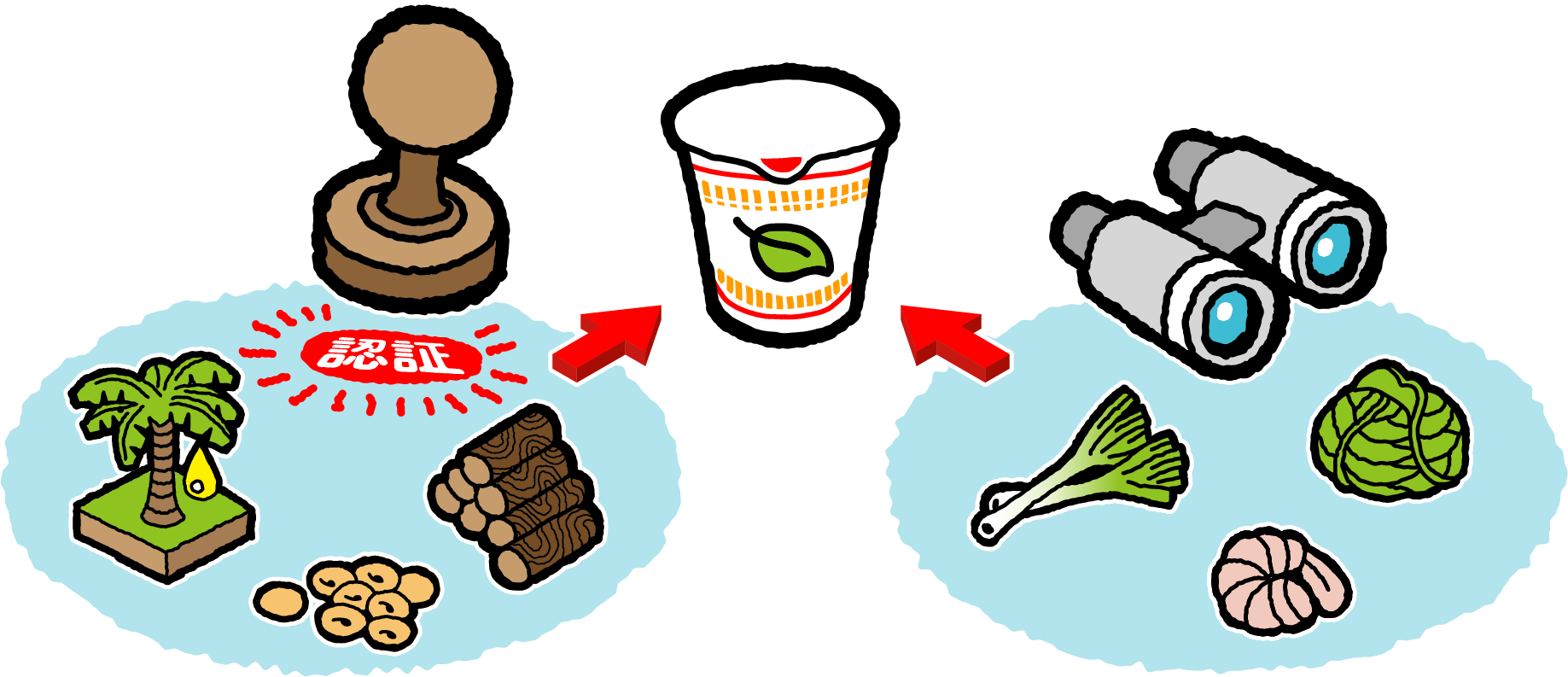
NISSIN FOOD PRODUCTS has been using palm oil certified by the Roundtable on Sustainable Palm Oil (RSPO), which is produced and processed with due consideration given to deforestation prevention, biodiversity preservation, and human rights, and other factors, at all domestic factories that manufacture CUP NOODLES since February 2020. As of April 2026, RSPO-certified palm oil accounts for 52.3% of the palm oil used by the NISSIN FOODS Group. (This figure is 100% for domestic instant noodles.) In the future, in addition to the procurement of RSPO-certified palm oil, the Group aims to procure palm oil that is assessed to be sustainable under the Group’s own assessment, with the goal of achieving a sustainable procurement ratio of 100%.

The Group aims to reduce the resources
it uses across
all its business activities.
Targets
- Overall water use
-
12.3㎥
per million yen of sales(IFRS-based sales)




Key Actions
- Appropriate monitoring and management of water risks
-
In addition to reducing the amount of water required in the manufacturing processes of products, the Group reuses water for operations such as cleaning equipment with water originally used for cooling. In addition, we use AQUEDUCT* to assess water risks at our factory locations. Based on the results of this analysis, we have established a system to conduct additional investigations, including interviews with factory managers and on-site visits to factories determined to be at high risk.
- *A map provided by the World Resources Institute (WRI), an international environmental NGO, showing water risks in regions around the world.


In addition to maintaining its food waste recycling ratio
in its manufacturing,
the Group also promotes waste
reduction in its sales and distribution processes.
Targets
- Waste recycling ratio
-
99.5%
*1 Resource recycling rate in the production processes at factories of Group companies in Japan.
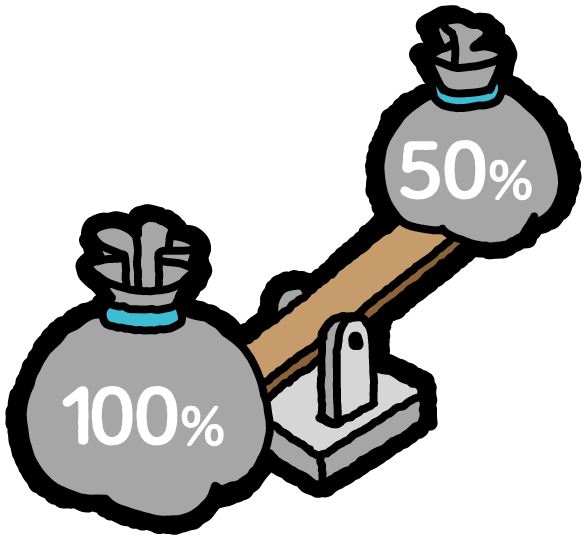
- Total waste reduction
-
50%
*2 Waste generated during the sales and distribution stages in Japan, compared to FY 3/2016.















Key Actions
- Reducing Food Loss Across the Value Chain
-
The NISSIN FOODS Group is working to recycle food residues, which account for a large portion of its waste, into animal feed and fertilizer. We are also working to reduce sludge through improvements to wastewater treatment facilities and to recycle mixed waste. In addition, we are reducing food loss by extending product shelf lives and improving sales forecasts. In the sales and distribution processes, we donate products approaching their best-before dates to food banks and other organizations.


The Group aims to increase the renewables’ share
of
total electricity use in its manufacturing processes.
Targets
-
Scope 1+2
(CO2 emissions of reporting company
and its subsidiaries and affiliated companies) -
42% reduction
- *1 Compared to 2020; overall NISSIN FOODS Group targets (including overseas subsidiaries)
- *2 May 2023 Target Revised







Key Actions
- Expanding Renewable Energy Procurement
-
Since March 2020, 50% of the electricity used at the Tokyo Head Office of NISSIN FOODS HOLDINGS has been supplied by waste-to-energy electricity derived from renewable energy sources. Instant noodle containers with oil residue after consumers finish eating, are generally disposed of as burnable waste and incinerated. By introducing waste-to-energy electricity, which utilizes energy generated through incineration, at the Tokyo Head Office, the Group is promoting the effective use of resources.
The Group will continue focusing on renewable energy capital investment and procurement in the future.
In addition, we are expanding our procurement of renewable energy by installing solar panels and introducing environmentally friendly equipment at manufacturing sites in Japan and overseas, as well as by promoting corporate off-site PPA, under which electricity generated by renewable energy facilities located off our premises is procured from retail electricity providers.


The Group aims to reduce CO2 emissions
by the Life Cycle Assessment (LCA) calculation method.
* LCA determines the environmental impacts of products,
processes or services, at every stage from procurement
through production, disposal and recycling.
Targets
-
Scope 3
(CO2 emissions of suppliers and other business associates) -
25% reduction
- *1 Compared to 2020; overall NISSIN FOODS Group targets (including overseas subsidiaries)
- *2 May 2023 Target Revised







Key Actions
- Use of plant-derived ingredients
-
The feed and water necessary for livestock production and the methane gas emitted from cow belches and excretion have an enormous environmental impact. Plant-derived proteins which have a lower environmental impact are attracting attention. The Global Innovation Research Center has developed meat alternatives such as “Soy Meat” and the Group would like to be able to replace all ingredients originating from livestock with plant-derived ingredients in the future.
The Group also continues its research on Cultured Meat as a food ingredient with a low environmental impact. Cultured Meat is meat derived from cells obtained through tissue cultivation rather than from the body of livestock and has enormous potential as a meat substitute. In 2019, we became the first in the world to successfully produce a large, three-dimensional muscle tissue in the form of a diced steak using bovine muscle cells.*1- *CO2e is short for CO2 equivalent and, for any quantity and type of greenhouse gas, CO2e signifies the amount of CO2 which would have the equivalent global warming impact. (Source: Japan Center for Climate Change Actions)
- *1The above research achievement resulted from a joint research project with The University of Tokyo (August 2017 to the end of March 2025). The project was selected as an exploratory research project under the Japan Science and Technology Agency’s (JST) “Moonshot Research and Development Program” in FY 3/2019 and advanced to a full-scale research project in FY 3/2021.


The Group aims to reduce its usage of petroleum-based plastic.
Targets
-
Scope 3
(CO2 emissions of suppliers and other business associates) -
25% reduction
- *Compared to 2020; overall NISSIN FOODS Group target (including overseas subsidiaries)
- *May 2023 Target Revised









Key Actions
- Introduction of Biomass ECO Cups
-
Since December 2019, NISSIN FOOD PRODUCTS has switched the containers used for CUP NOODLES to the Biomass ECO Cup, which has a lower environmental impact.*1
The Biomass ECO Cup achieves a biomass content of 81% by replacing a portion of the petroleum-derived plastic used in the container with plant-derived biomass plastic. Compared with the ECO Cup, it nearly halves the amount of petroleum-derived plastic used per cup and reduces CO2 emissions across the container’s entire life cycle by approximately 16%.*2- *1 As of FY 3/2022, NISSIN FOOD PRODUCTS’ CUP NOODLES brand cups have already been switched to biomass ECO cups.
- *2As of 2018.